
Character Design Sheet: How to Make One Step by Step
You have a character living in your head, but every time you draw them, they look a little different. A character design sheet fixes that by gathering every angle, expression, and detail into one clear page you can trust.
What Is a Character Design Sheet?
A character design sheet is a single page that shows your character from multiple views, sometimes called a model sheet or reference sheet. Animators, illustrators, and comic artists use it to keep a character consistent across hundreds of drawings.
Think of it as your character’s passport. Anyone who sees it should be able to draw them correctly.
What to Include on Your Character Design Sheet
Not every sheet needs everything below. Choose the parts that fit your project.
- Turnaround: front, three-quarter, side, and back views
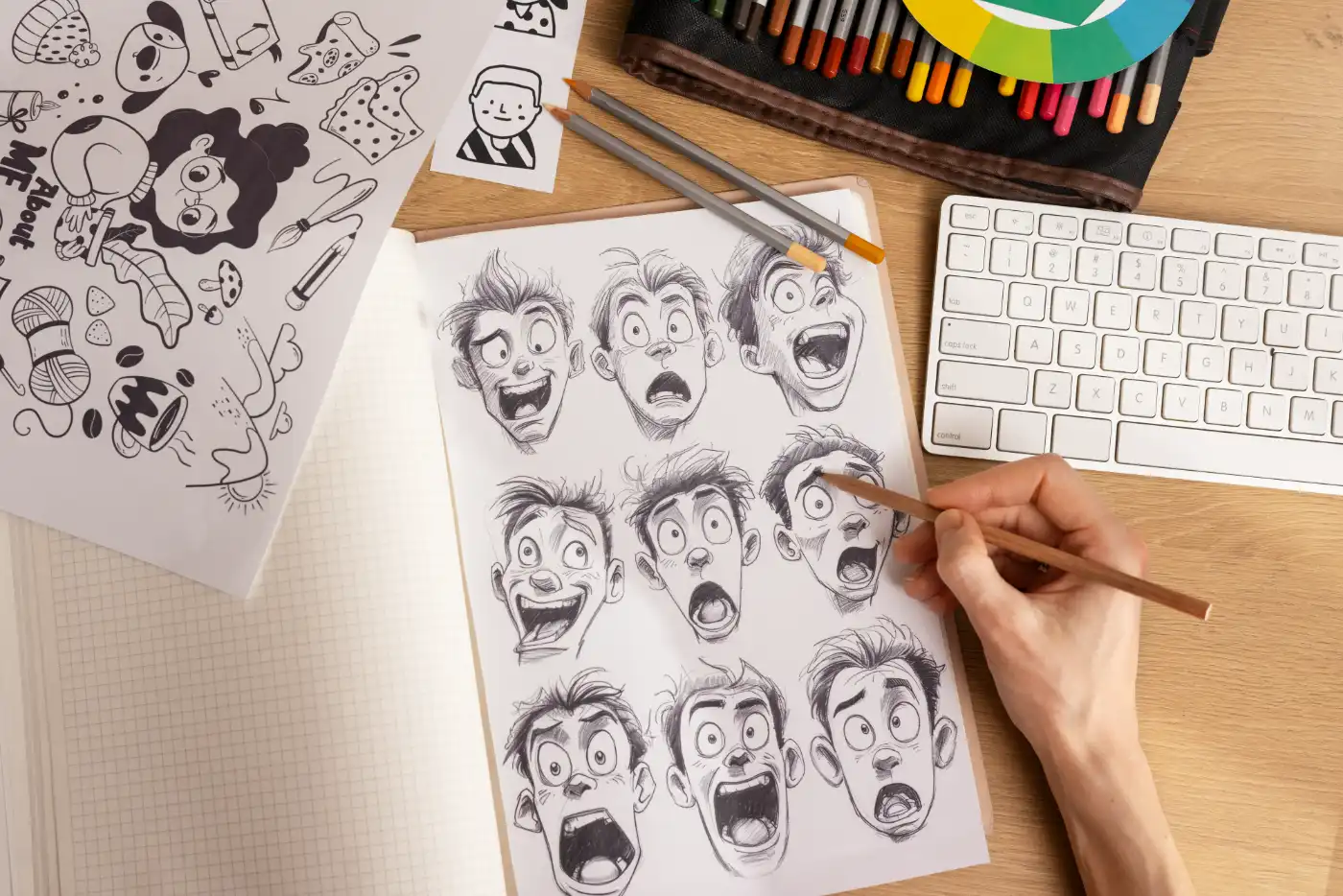
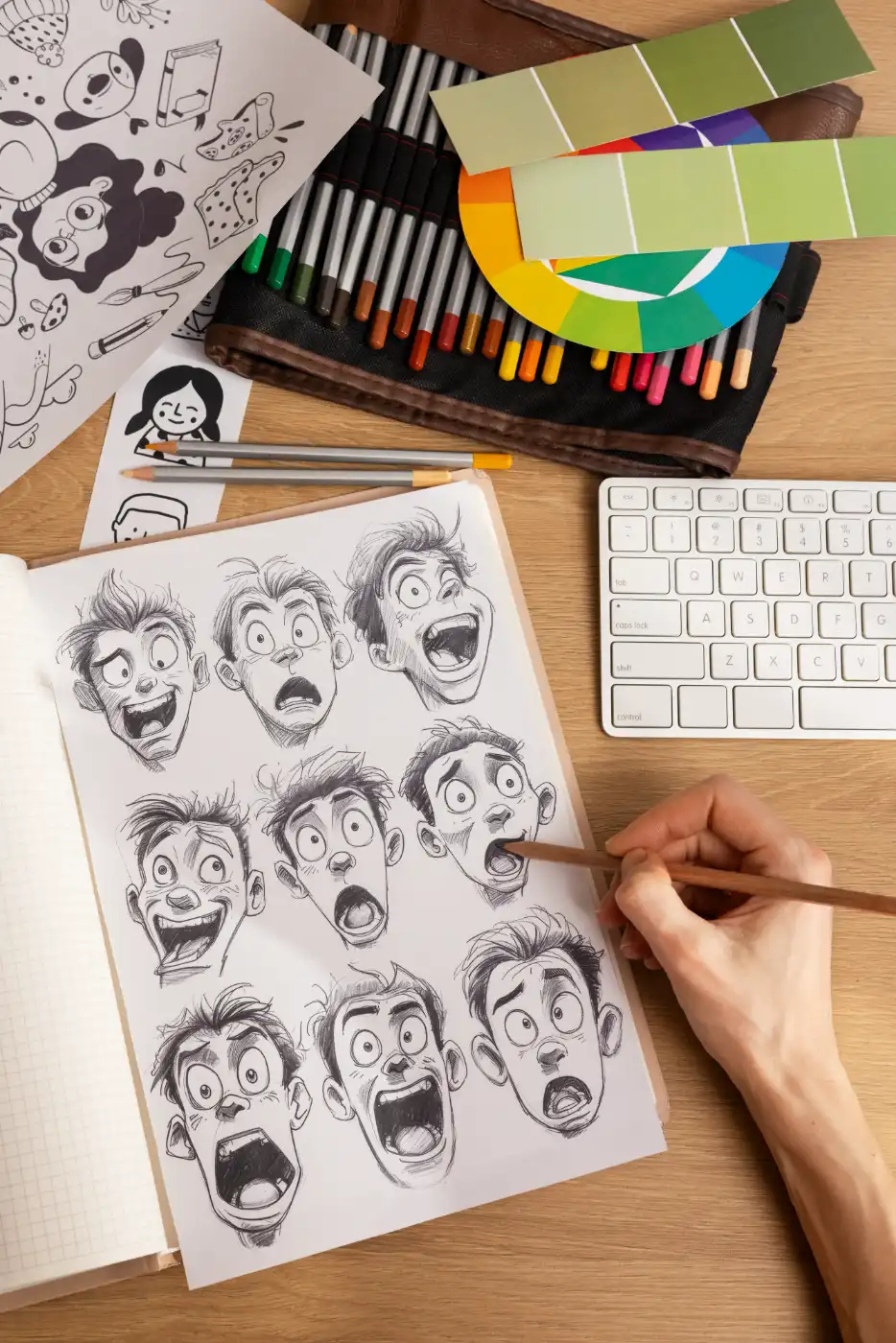
- Expression range: happy, sad, angry, surprised, and one face unique to them
- Pose studies that show how they move and stand
- Color palette with clearly labeled swatches
- Close-ups of props, costume details, hair, or accessories
- Height chart comparing them to other characters or a simple human scale
- Short personality notes, so your drawings match who they are
How to Make a Character Design Sheet in 5 Steps
Take your time with each step, because a sheet you build slowly saves you hours later.
Step 1: Know Who Your Character Is
Write three words that describe their personality before you draw anything. Shy, stubborn, and kind will lead to a very different silhouette than bold, reckless, and loud.
Step 2: Sketch Loose Explorations
Fill a page with quick thumbnails and different shapes. Pick the one whose silhouette reads clearly even when filled in solid black.
Step 3: Draw the Turnaround
Draw horizontal guidelines across the page for the top of the head, eyes, shoulders, hips, and feet. Keep every view lined up to them so proportions stay consistent.
Step 4: Add Expressions and Poses
Show how your character reacts to the world around them. Let the whole body join in, not just the face.
Step 5: Finalize Color and Notes
Choose a limited palette of three to five main colors. Label each swatch and add short notes about anything another artist might get wrong.
Gentle Tips for a Cleaner Sheet
Small habits make your reference page easier to read and use.
- Keep your linework simple, since clarity matters more than polish
- Use the same line weight across every view
- Leave breathing room between drawings so the page feels calm
- Revisit your sheet after a day away, when fresh eyes catch mistakes
- Save older versions, so you can see how your character has grown
Why a Character Design Sheet Is Worth the Effort
Consistency is what makes a character feel real. When their hairstyle or proportions shift from page to page, readers notice, even if they cannot say why.
Building a design sheet also deepens your figure drawing skills, because you study the same body from every angle. It is a lovely exercise to return to in your sketchbook between bigger projects.
Common Questions About Design Sheets
Here are quick answers to what beginners ask most.
What Is the Difference Between a Design Sheet and a Turnaround?
A turnaround shows only rotating views of the character. A full design sheet includes the turnaround plus expressions, poses, colors, and notes.
Can I Make One Digitally?
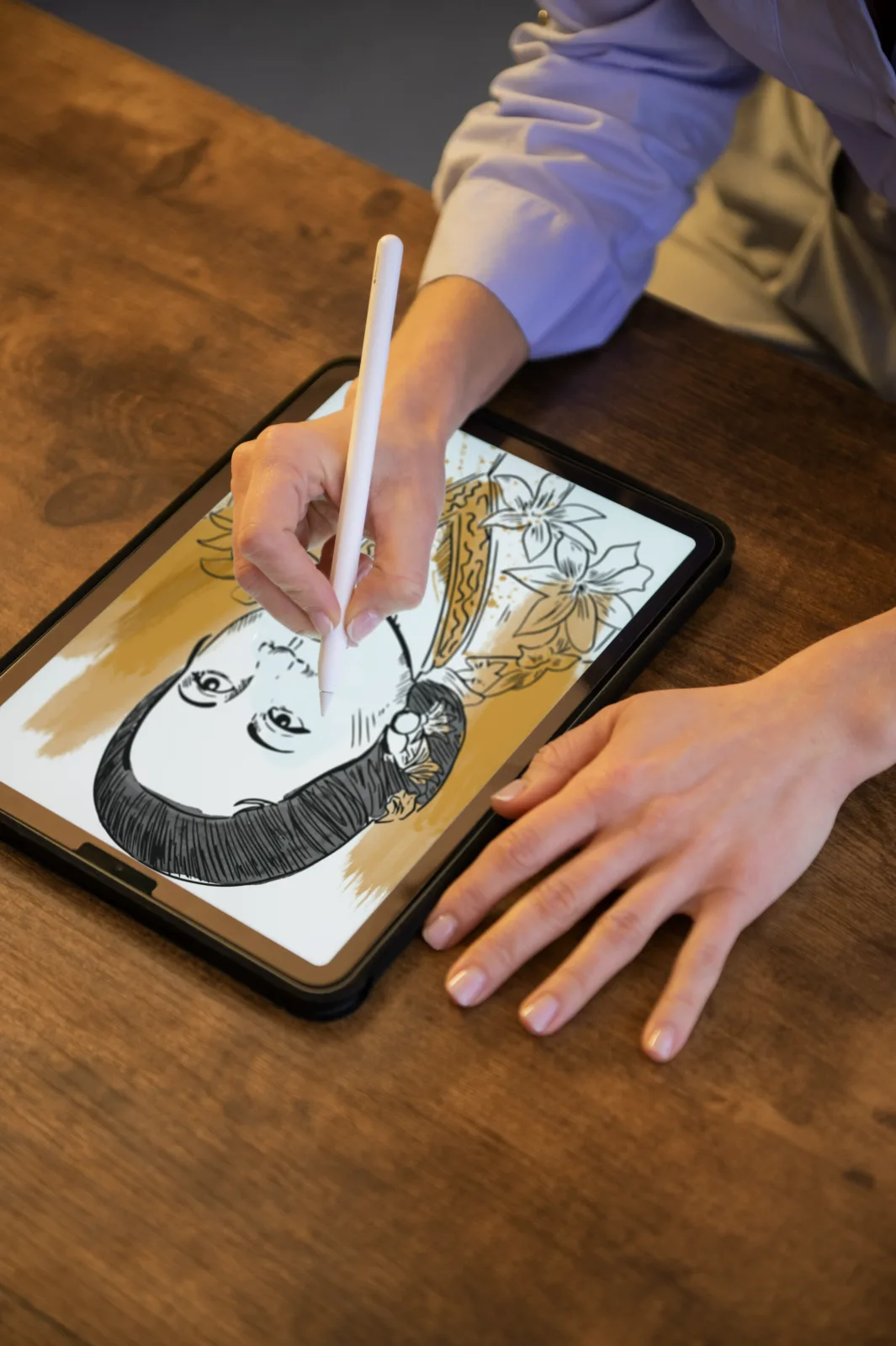
Yes. Apps like Procreate, Krita, and Clip Studio Paint make guidelines and layers easy, but paper and pencil work just as well.
How Many Views Do I Need?
Front and side views are a good minimum. Add three-quarter and back views once you feel comfortable.
Do I Need to Be a Skilled Artist to Make One?
Not at all. A simple, honest sheet drawn in your own style is far more useful than a polished one you never finish.
Give Your Character a Home on the Page
Start with one simple front view today, then add a new angle each time you sit down. Before long, your character design sheet will feel like a trusted friend you can always return to.